
Wayne County Court Docket Searches
Start at the North Carolina eCourts Portal. Wayne County joined eCourts in April 2025. That makes this state-run Portal the public route to a Case Summary, also called a Register of Actions. It is not a private Wayne database. Smart Search lets you begin with a party, record number, citation number, attorney or bar number, business name, cross-reference number, or nickname. A precise number cuts the odds of pulling up the wrong case record.
Before searching, confirm that Wayne is the right venue. This matters when a citation or mailing address shows a town name instead. Open the matching Case Summary. Check the court, case type, and parties before reading the events. If the question is simply where or when a hearing happens, Search Hearings works better. The Portal gives a public view. The Wayne County Clerk of Superior Court keeps the official local record.
- Open the Portal and use Smart Search with the strongest identifier available.
- Apply the Wayne location and a public category when results need narrowing.
- Confirm the case number, court, party roles, and public case type.
- Review Case Events, Hearings, Dispositions, and Financial Information where they apply.
- Use Search Hearings and the local calendar, then ask the Clerk for an official copy if needed.
Note: A missing remote result can reflect spelling, venue, a migration issue, or a lawful restriction. It is not proof that no Wayne County court record exists.
Wayne County Docket Search Fields
Smart Search takes more than a surname. The Portal's own materials describe fields for names and identifiers, plus filters for location, case type, status, and filing-date range. Check the court named on your notice first. Only then apply a Wayne filter. A date of birth can appear in advanced party criteria, but public access to that information is restricted or masked.
| Portal field | Use | Wayne search note |
|---|---|---|
| Party or business name | Find a public case by a named party or business. | Use documented wildcard minimums for partial names. |
| Record, case, or citation number | Open a more precise Case Summary. | A citation number is often the best traffic key. |
| Attorney or bar number | Locate matters connected to counsel. | Search Hearings supports those criteria too. |
| Location and category | Narrow public results. | Portal names Civil Actions, non-confidential Special Proceedings, Estates, and Criminal Actions. |
The Portal training resource also walks through Search Hearings and NC Judgment Search. Think of Judgment Search as an index. It can point you to an indexed judgment. But it does not replace a Case Summary. Once you know a judgment exists, Smart Search gives you the fuller public history of the case.
North Carolina eCourts explains the Odyssey modernization effort that moved Wayne County into the statewide system. That page lays out what changed and who is affected. Searching the public docket takes no registration. A My Cases account is optional. It only lets you save cases you pull up; it grants no access to restricted records.
The eCourts transition is why the statewide Portal, not a separate county website, serves as the main Wayne County docket search channel.
Court Dockets: What They Show
A Wayne County Case Summary is a structured court record view, not a bare list of court dates. North Carolina calls the detailed screen a Case Summary or Register of Actions. It can pull together basic case information, court assignments, parties, causes of action for qualifying civil matters, chronological events, hearings, dispositions, and financial information where applicable.
Each block answers a different question. Case Information identifies the matter. Assignment Information shows the court context. Party Information explains who plays what role. Case Events form the public timeline, and Hearings carry current scheduling. A disposition may show a recorded result. Not every case fills every field, and an event on the docket does not guarantee a document image behind it.
| Case number | An Enterprise Justice number uses year, case-type letters, a six-digit sequence, and a county identifier. 21CR000003-910 is a state training example, not a Wayne case. |
|---|---|
| Parties and assignments | Public Case Information, Assignment Information, and Party Information identify the matter and court context. |
| Case Events | The public chronology can reflect filings, orders, settings, or other activity. Use the displayed full label rather than guessing a code. |
| Hearings | Current hearing information can be checked again through Search Hearings. |
| Disposition and financial data | These sections appear where applicable and are not a substitute for a clerk-issued record. |
Wayne County Case Summary Terms
A few Portal labels carry plain meanings. A Register of Actions is the public chronological history, not a certified docket sheet. A Case Event is one timeline entry. A hearing is scheduled appearance information. A disposition is a recorded result or status. Knowing these terms helps you read a Wayne County court docket without mistaking generic abbreviations for local court codes.
- Smart Search
- The Portal function used to find a detailed public Case Summary.
- Search Hearings
- The Portal function for current hearing locations and times.
- Case Summary
- The Portal’s detailed public case view, also described as the Register of Actions.
- Continuance
- A request or decision that moves a scheduled matter. Wayne publishes a Request for Continuance form.
- Certified copy
- An official copy issued by the Wayne County Clerk of Superior Court.
Older entries need one extra check. Records predating the Odyssey conversion may carry a 12:00 AM timestamp after migration. That figure can be a conversion value. It may not be the true time of a filing or hearing. Verify a setting through Search Hearings, the calendar, or the appropriate court contact.
Wayne County Courts and Their Dockets
North Carolina has no separate Wayne "county court" docket for local matters. Wayne County sits inside the General Court of Justice. Superior Court and District Court are its trial divisions. Magistrates handle assigned preliminary and small-claims work. One unified Clerk of Superior Court keeps the local file across all of them.
Division matters when you pick a calendar or route a question. Superior Court takes felony cases, civil cases above the statutory threshold, and certain appeals. District Court handles misdemeanors and traffic infractions. Family and juvenile matters sit there too. Civil cases at or below the threshold also land in District Court. Magistrate and small-claims matters still belong to the state court path. No separate city or justice-of-the-peace system applies.
| Wayne court channel | Docket subjects | Where to begin |
|---|---|---|
| Superior Court | Felonies, larger civil cases, and certain appeals. | Portal, relevant calendar, then Clerk or Superior Court channel. |
| District Court | Misdemeanors, traffic, family, juvenile, and lower-value civil matters. | Portal Smart Search or Search Hearings, then District Court/Clerk channel. |
| Magistrates and Small Claims | Assigned preliminary criminal matters and small claims. | Portal and the Clerk or magistrate channel. |
| Clerk divisions | Estates and special proceedings, plus trial-division files. | Portal advanced category and the Wayne County Clerk. |
The Judicial Branch's court-structure overview lays out the statewide hierarchy behind this Wayne County routing. A city police agency may issue a citation. Even so, Wayne County's municipalities have no separate municipal-court docket of their own.
The state court hierarchy helps you tell a District Court setting from a Superior Court case, while both records stay inside the Wayne County clerk system.
Wayne County eCourts Docket Change
Wayne County joined the state's electronic courts on April 28, 2025. That day, eCourts, File & Serve, Enterprise Justice, and Portal all went live. The switch gave Wayne County a public docket search route that matches the rest of the statewide system. One thing did not change. The Clerk of Superior Court still holds the official record. Certified copies still come from that office. Older files can also look newer than they are, since historical material gets converted into the new system rather than being created there.
The courthouse itself carries a longer story. Wayne County's courthouse at 224 E. Walnut Street is documented as a 1913 building. The Portal sits on top of that long paper history. It works as a modern access layer. An online docket entry does not guarantee that every old paper court record was born digital or shows the same detail as the file itself. The clerk counter, the courthouse Kiosk, and a direct file request still fill the gaps. The North Carolina architecture catalog records the historic courthouse building tied to Wayne court records.
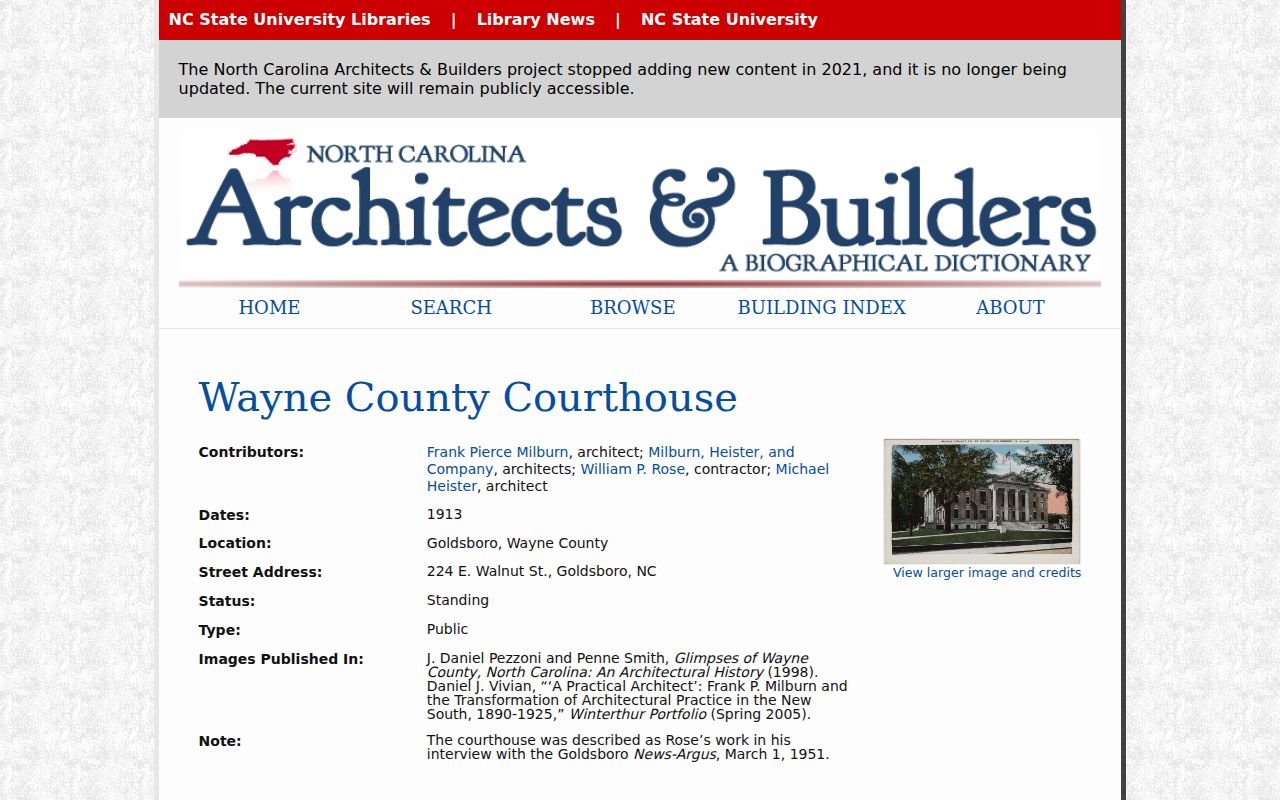
Old brick, new Portal. A Wayne County docket can carry both an electronic search trail and a physical record held at the clerk's office, and a thorough case lookup may end up using each.
Court Dates and Settings in Wayne County
Wayne County offers several date channels. They work best together. A Case Summary includes a Hearings component. Search Hearings can filter current locations and times by case, party or business, attorney or bar number, judicial officer, or courtroom. The county also links separate civil and criminal calendar endpoints. One caution: a posted calendar is only a schedule check. If information conflicts, the Clerk's official record and a court order control.
To confirm a court date, start with the citation, notice, or the most recent Case Summary entry. Write down the exact case number. Then run Smart Search and Search Hearings. Check the linked Wayne calendar for the civil or criminal context that fits the case. A recent continuance or filing may still need confirmation. Use the Clerk or the proper court channel. The Wayne County court schedule lays out the full date-confirmation sequence.
Wayne County Calendar Access Channels
The Wayne local schedules page gathers the Portal and calendar routes in one spot. It also identifies a District Court schedule. Civil and criminal calendars serve a different purpose than a Case Summary, though. They show where a current hearing sits in a session or schedule. They are not a certified case file.
| Need | Wayne channel | Best use |
|---|---|---|
| Current hearing time or location | Portal Search Hearings | Search with the available case, party, attorney, judicial officer, or courtroom criterion. |
| Civil session context | Wayne civil calendar | Check the schedule after opening the Case Summary. |
| Criminal or traffic session context | Wayne criminal calendar | Confirm the current setting after a Portal search. |
| Changed or unclear setting | Clerk or court contact | Use the most recently confirmed court information. |
Wayne's local rules page lists a Calendar Request form and a Request for Continuance form. Those official names signal something important. Moving a court date is a court procedure, not a walk-in promise. Before filing anything, rely on the current official form rather than a summary of it.
Two links cover the practical ground. Wayne County court services connects the Portal and calendar resources, while Wayne local rules and forms is the official home for current procedural materials.
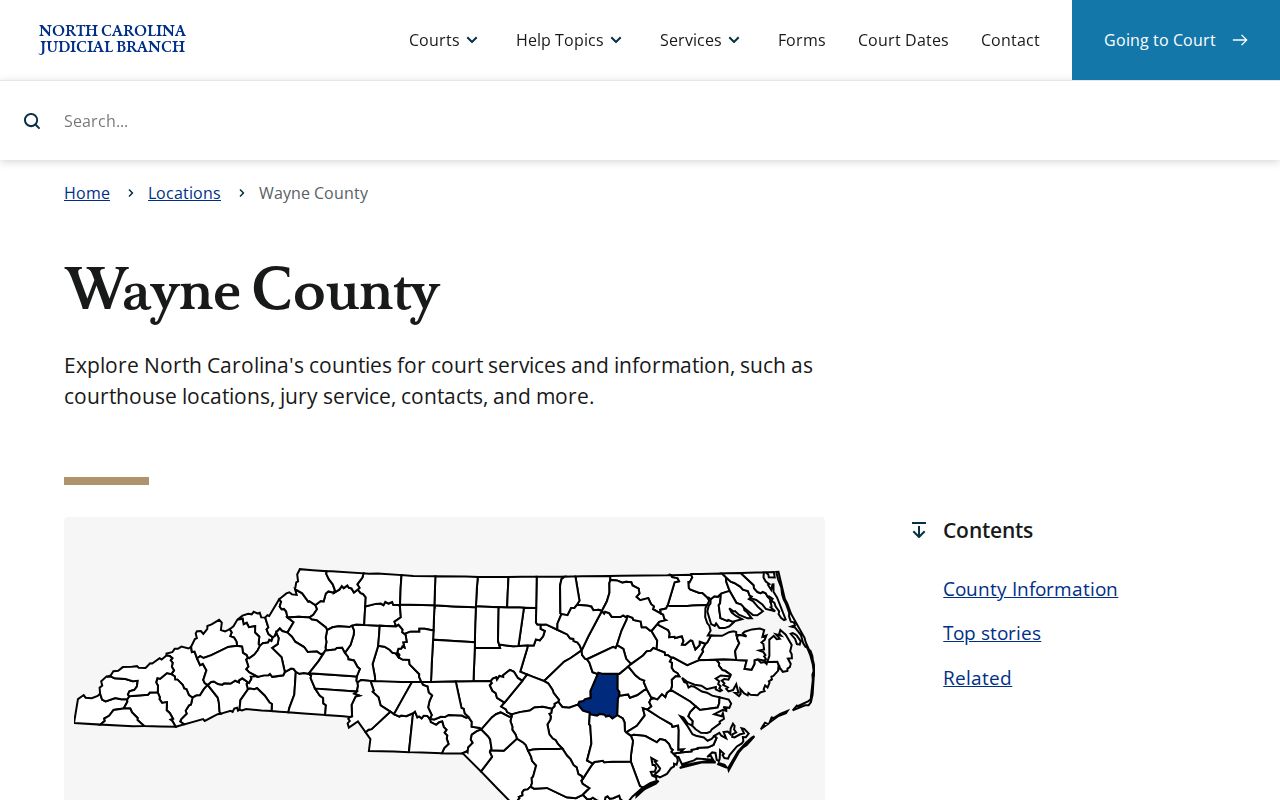
One page pulls it together. The county court services page links the Portal and the local calendar resources a Wayne County setting check relies on.
Docket Access Under North Carolina Law
North Carolina starts from a baseline of public inspection. Under G.S. 7A-109, clerks keep the records, files, dockets, and indexes, and the public may generally inspect them during regular office hours unless another law closes them. In Wayne County, the Portal adds convenience. It never replaces the clerk's custody of the record.
Key Rules:
G.S. 7A-109 establishes clerk custody and the public-inspection baseline for court records and dockets.
G.S. 7A-308 sets listed fees for clerk copy preparation, certificates, exemplifications, and some searches.
G.S. 7B-3000 withholds juvenile records from ordinary public inspection except as the statute permits.
Portal itself draws a clear line. It calls its public Case Summary and eligible documents an access service. That service is not the official court record. When remote access falls short, the courthouse Kiosk can bridge the gap. Public terminal availability is documented statewide. Wayne sources, though, promise neither a terminal count nor staff-assisted searching.
Wayne County Restricted Court Records
Public access has limits. Portal materials name juvenile records, unreturned criminal warrants, and protected matters. These are among the records restricted or unavailable to ordinary public users. Creating an account does not restore a sealed or expunged item. Nor will a public result carry some universal sealed label. The normal public view may simply omit a restricted matter without comment.
A no-result calls for a careful second pass. Check spelling, venue, number format, and migration timing before assuming anything. If a record is old or just not visible remotely, the Wayne Clerk is the sensible next step. The courthouse Kiosk is another. If a matter is juvenile, sealed, expunged, confidential, or otherwise protected, ordinary registration grants nothing. That boundary protects civic court-reference access and keeps official records under the clerk's control.
How the Clerk Keeps Docket Records
Wayne County runs one unified Clerk of Superior Court structure. The Clerk keeps the local docket and file for Superior Court, District Court, estates, special proceedings, judgments, and magistrate-related matters. The contact directory splits inquiries into Civil, Criminal District, Criminal Superior, Domestic, Estates, Juvenile, and Special Proceedings channels. Those divisions route a question. They do not create separate record custodians.
Try the Portal first when a case number would sharpen the request. A public Case Summary can do the same. For a paper or electronic file, a plain copy, a certification, or an item missing online, contact the Clerk. Give the case number, division, party or caption, the document requested, and whether a plain or official copy is needed. The Portal states plainly that official copies come from the appropriate county Clerk.
Wayne County Clerk of Superior Court
224 E. Walnut Street, Room 230
Goldsboro, NC 27530
(919) 722-6100
The Clerk Office is listed Monday through Friday, 8:30 a.m. to 5:00 p.m. Arrive before 4:30 p.m. to open a new estate, file an upset bid, or make a payment, the courthouse asks. That is a service detail. It is not a promise about online docket availability. The official courthouse page carries the verified address, hours, parking, and accessibility information.
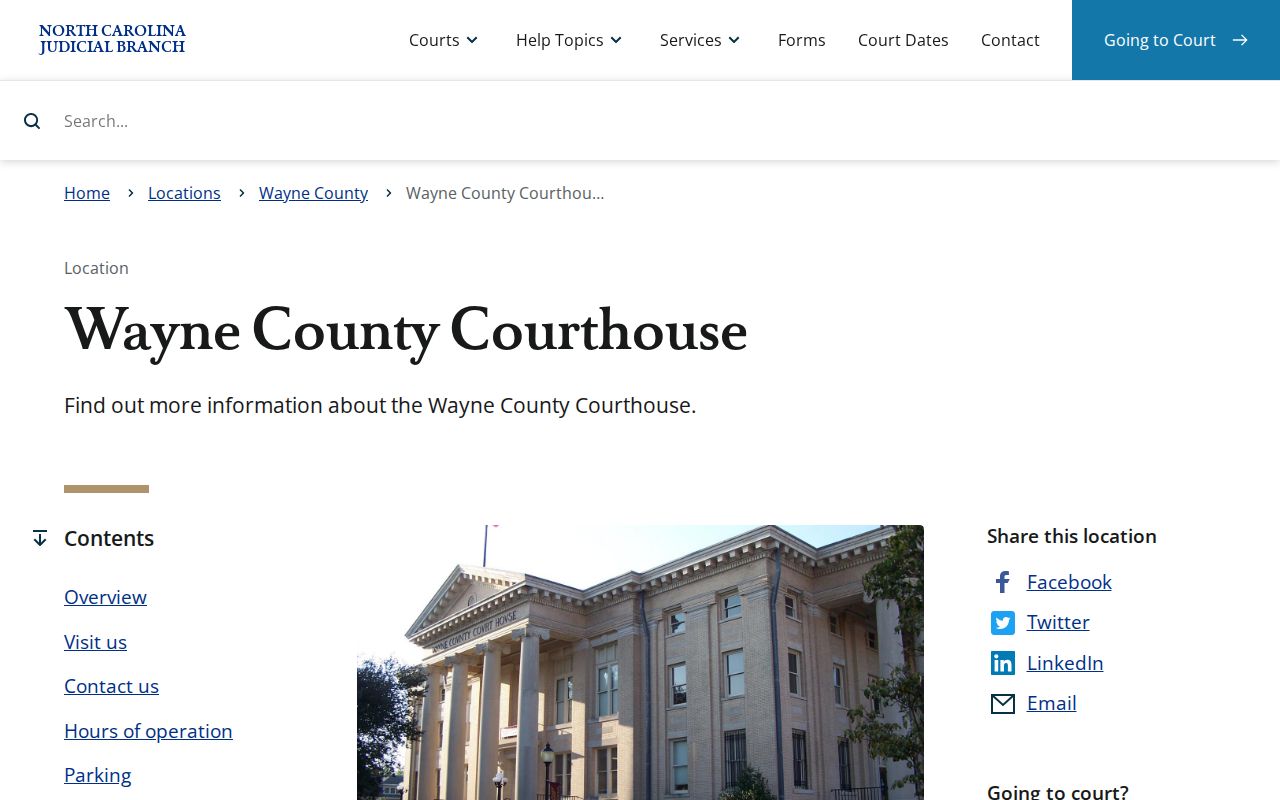
Need a clerk's eyes on a Portal result or an official copy? The Wayne County courthouse is where that happens in person.
Wayne County Official Court Copies
Know what you are asking for before you order. A Case Summary is just the Portal timeline. A public document image is viewable online only when it is eligible and uploaded. An official court-held document calls for a certified copy or certificate from the Clerk. Transcripts work differently. The court reporter and the digital-recording and transcription process sit apart from an ordinary clerk copy request.
| Clerk service | Verified amount | Wayne record use |
|---|---|---|
| Copy preparation | $2.00 first page of each document; $0.25 each additional page or fraction. | Applies when the Clerk prepares the copy. |
| Certificate under seal | $3.00 | Use when the receiving authority asks for a clerk certificate. |
| Exemplification | $10.00 | Request only when the receiving authority needs that form of authentication. |
| Criminal record search | $25.00, with statutory exceptions. | Not a substitute for a certified case record. |
G.S. 7A-308 lists the fees, but Wayne posts no universal online copy-request form and promises no turnaround. Ask the Clerk for the current charge and timing before you order. Confirm first; it saves a trip.
City-by-City Court Dockets in Wayne County
Wayne County's five largest incorporated places in the 2020 Census all have city or town governments. Yet none runs its own municipal-court docket. A citation can start with a local police department. From there it enters the Wayne County District Court and Clerk system. For the public, the court-record route stays the same. It runs through the Portal, Search Hearings, the Wayne calendar, and the Clerk.
Goldsboro Court Records
33,657 in the 2020 Census. Goldsboro is the county seat, but City Hall is not the court-record counter.
Mount Olive Court Records
4,198 in the 2020 Census. Confirm the county printed on the notice before filtering to Wayne.
Fremont Court Records
1,196 in the 2020 Census. Fremont Police can be a citation origin, while the record follows the Wayne route.
Village of Walnut Creek Court Records
1,084 in the 2020 Census. Village administration and Police HQ do not serve as a state court counter.
Pikeville Court Records
712 in the 2020 Census. Town Hall and the Wayne Clerk have different record roles and locations.
For the dated population ranking behind these local routes, see the 2020 Census incorporated-places table, which lists each place by count.
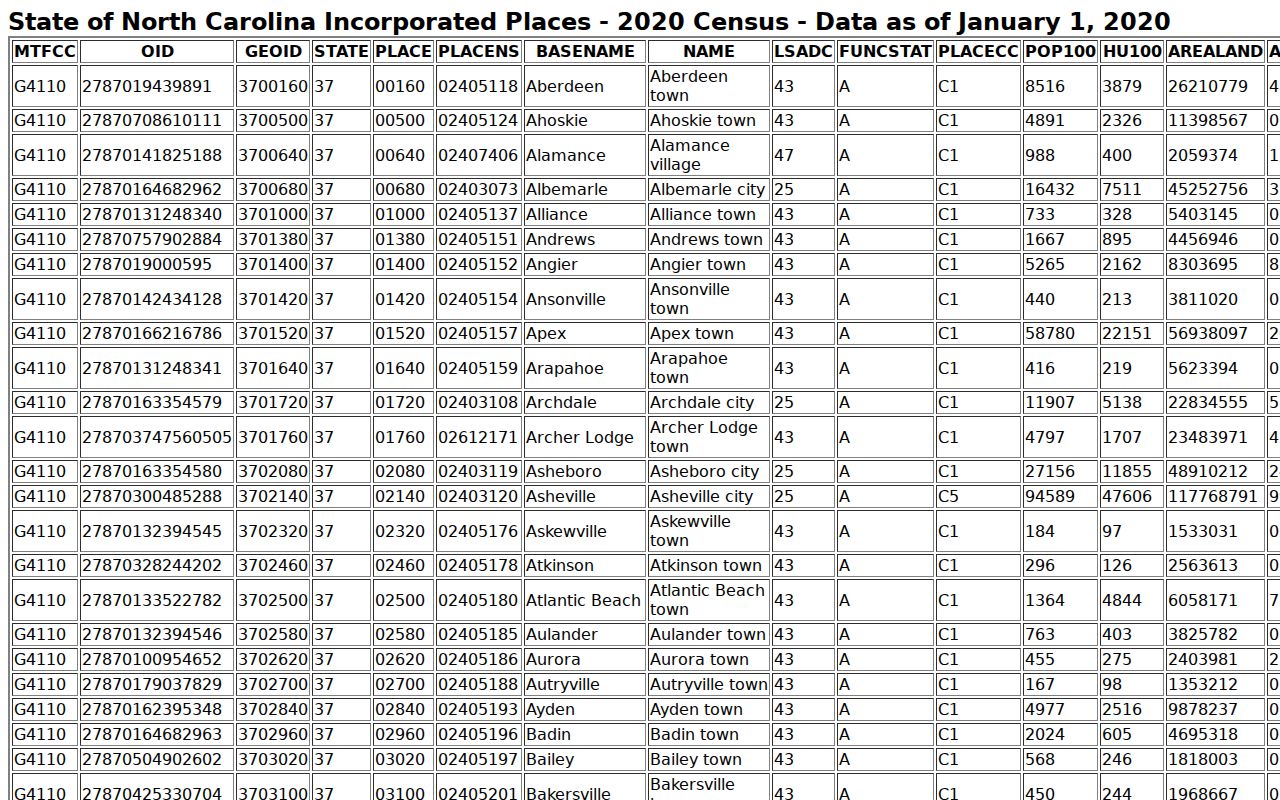
The census table counts city populations. The state court system tells you where a Wayne County case record actually lives, and the two answer different questions.
Wayne County City Court Routes
Goldsboro, Mount Olive, Fremont, Village of Walnut Creek, and Pikeville share a state-court record structure even though their local facts differ. For an eligible public matter, the practical route is citation or case number → Portal Case Summary → Search Hearings and the appropriate Wayne calendar → Clerk for a missing, official, or certified record. A criminal District Court appeal can create a separate Superior Court docket check.
Federal cases run on a different track. Wayne County sits in the Eastern District of North Carolina. Federal dockets there use PACER, not the state Portal. Each system keeps its own clerks. Each also has its own case-management tools and its own access rules. So don't take a federal question to a Wayne County state docket search. Start instead with the court named in the federal notice. The Eastern District of North Carolina court locations page maps that separate federal system.
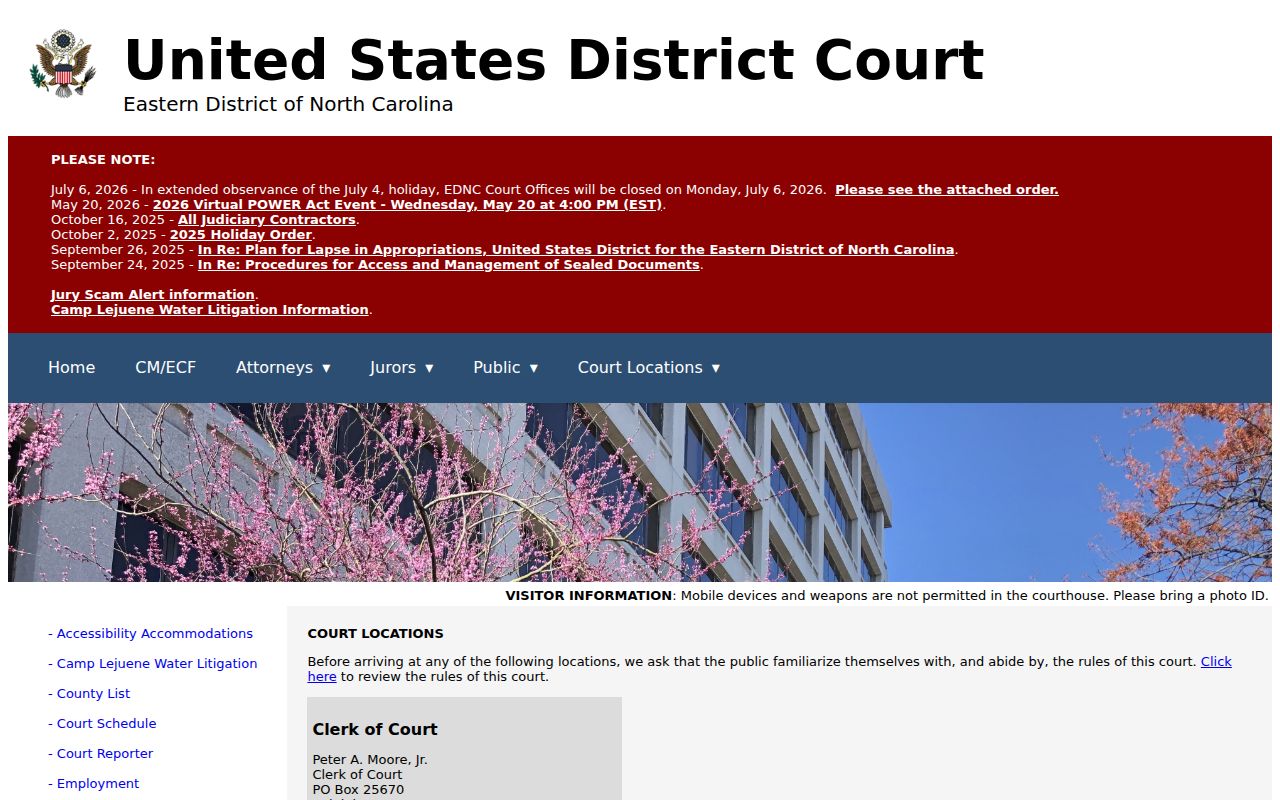
The federal location resource keeps a federal docket question from landing at the Wayne County state courthouse by mistake. Wayne caseload figures do exist, spread across official annual reports and the newer state dashboard, but any meaningful number needs its report year and its case category attached. The Case Statistics Dashboard announcement describes the county-filtered tool rather than quoting a figure that would be pure guesswork.
Use the dashboard for dated Wayne County court activity. It does not replace the individual Case Summary or the record the Clerk holds.
Map and Directions to the Wayne County Courthouse
Wayne County's Superior and District Court files, and the Clerk of Superior Court's Room 230 office, are kept at the Wayne County Courthouse, 224 E. Walnut Street, in Goldsboro. Goldsboro is the county seat and courthouse location for the whole county, so citations from Mount Olive, Fremont, Walnut Creek, and Pikeville route to this same building.
Wayne County Courthouse
224 E. Walnut Street, Room 230
Goldsboro, NC 27530
(919) 722-6100
Monday through Friday, 8:30 a.m. to 5:00 p.m.
Parking is available in a William Street-side lot across from the courthouse and in the Sheriff's Department lot across Chestnut Street, with handicap parking on the Ormond Avenue side. New estates, upset bids, and payments need to be started before 4:30 p.m., ahead of the 5:00 p.m. close.